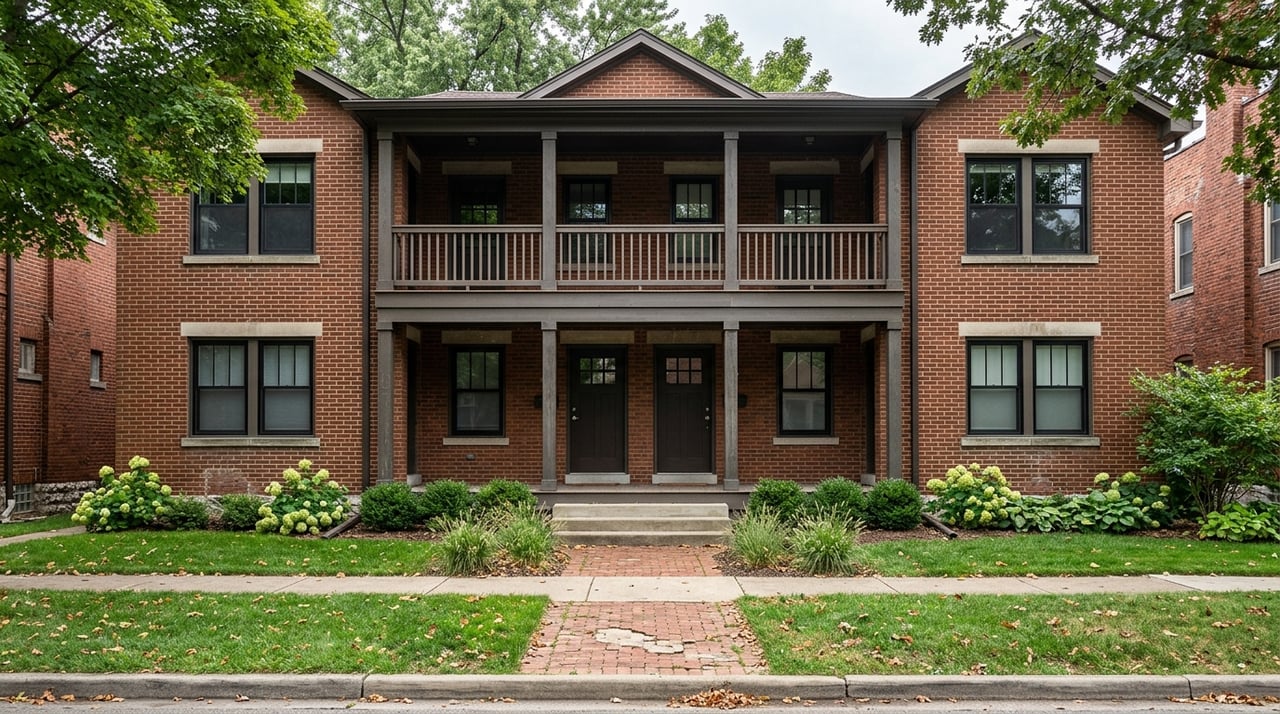
How to Analyze Detroit Investment Properties Wisely
May 7, 2026
May 7, 2026
If a Detroit investment property looks great at first glance, that is exactly when you should slow down. In a market where purchase prices can look low and gross yields can seem strong, the real story often shows up in taxes, compliance costs, vacancy risk, and block-by-block rent support. If you want to analyze Detroit investment properties more confidently, this guide will help you build a practical underwriting approach grounded in local facts. Let’s dive in.
Detroit can reward disciplined investors, but it is not a market where broad averages tell the whole story. As of late 2025, reported median sale prices ranged from about $91,667 to $105,000 depending on the source, and average rent estimates ranged from roughly $1,200 to $1,315, while Census data showed a median gross rent of $1,034 for 2019 through 2023. Those numbers can make deals look attractive on paper, but they also show how much results can vary depending on the property and location.
That variation matters because Detroit is highly local. Public data also shows Detroit has a lower owner-occupied housing rate than Wayne County, which supports the idea of a meaningful renter base, but it does not erase the fact that one street can perform very differently from the next. In Detroit, conservative assumptions are not pessimistic. They are practical.
One of the biggest mistakes investors make is underwriting to a single rent figure. In Detroit, public benchmarks are best used as a range for screening rather than a fixed answer.
Here is a useful way to think about the available rent data:
These figures measure different things, so they should not be treated as interchangeable. A smart approach is to use them as guardrails, then compare them against true local rental comps for similar homes, unit sizes, and condition.
Neighborhood spread in Detroit is wide. Zillow neighborhood figures in the research ranged from about $51,380 in East Village to $496,095 in Indian Village, with West Village and Islandview also landing at very different price points. That kind of spread is a clear sign that one citywide comp set is not enough for underwriting.
If you are analyzing a single-family rental or small multifamily property, focus on nearby rentals with similar condition, size, and layout. A renovated property may justify a stronger rent than an outdated one, but only if nearby tenant demand supports it. In this market, the wrong rent assumption can break the deal before you ever get to closing.
A rough gross yield can help you triage opportunities, but it should never be your final decision tool. Using a simple example from the research, $1,200 in monthly rent against a $105,000 purchase price implies a gross yield around 13.7% before vacancy, repairs, taxes, insurance, and financing.
At first glance, that can look compelling. But Detroit is one of those markets where a deal that passes a quick screen can still fail once you model the real expense stack. Gross yield is the start of the conversation, not the conclusion.
For many Detroit rentals, property taxes are the most important line item in the analysis. This is where investors often get surprised.
Detroit notes that 1 mill equals $1 per $1,000 of taxable value, and Michigan’s Principal Residence Exemption can remove up to 18 school operating mills for owner-occupied principal residences. That matters because investment property is generally analyzed under nonhomestead taxation, not owner-occupied taxation.
According to the 2025 total property tax rates report, the Detroit City School District rate was 64.1844 mills for principal residence or agricultural parcels and 82.1844 mills for nonhomestead parcels. The city also states that taxable value is generally uncapped after a transfer, which means the tax basis can rise significantly when ownership changes.
Using the research example, if a $105,000 purchase resets to a taxable value of roughly half the purchase price, annual nonhomestead tax could land around $4,315 before parcel-specific adjustments. That is a major expense in a lower-price market.
This is why Detroit underwriting has to be parcel-specific. A property can look like a strong cash-flow play based on rent and price alone, then turn mediocre once you plug in realistic post-transfer taxes.
Taxes are not the only local cost to model. Most Detroit rentals also require registration and compliance steps that should be part of your upfront budget.
The city states that rental registration is free, but most residential rentals need a Certificate of Compliance. The city also says BSEED must inspect rental property at least once a year, and a new owner has to re-register after a transfer. If a property is not properly registered or compliant, that can lead to blight citations.
If the property was built before 1978, Detroit also requires a lead inspection and risk assessment for rental property. Any lead hazards must be reduced or controlled before a tenant occupies the home.
It helps to separate these items from your recurring operating expenses. When you analyze a deal, create a line for one-time pre-lease costs such as:
In older housing stock, these costs can materially affect your timeline and your initial cash requirement. That is especially true if you plan to lease the property quickly after closing.
Once rent and taxes are in place, move to operating expenses. The research suggests common budgeting heuristics of 8% to 12% of rent collected for management fees and 10% to 15% of monthly rent for repairs and emergency reserves. At $1,200 per month in rent, that works out to roughly $96 to $144 for management and $120 to $180 for repairs each month.
You should also consider annual maintenance inflation. The research suggests a 3% to 5% maintenance inflation buffer. For small multifamily properties or homes with master-metered utilities, owner-paid water or gas can also materially affect net income.
Before you call a Detroit deal viable, make sure your pro forma addresses:
Quick rules like the 1% rule or 50% rule can help you sort leads, but they should not replace a full parcel-level analysis.
Vacancy is a real underwriting issue in Detroit, and it should be treated as more than a routine percentage. Detroit’s consolidated plan cited large numbers of vacant housing units and vacant residential addresses, with many vacant units categorized as Vacant-Other, which can point to condition issues, title complications, or abandonment.
What that means for you is simple: surrounding vacancy can influence leasing speed, maintenance needs, resale potential, and even comp quality. If a block has scattered rehab activity mixed with vacant parcels, your best-case rents and exit values may not be the most reliable numbers to use.
A practical Detroit stress test should answer five key questions:
If the answer to any one of those questions is unclear, the deal likely needs more diligence.
In Detroit, tax status should be part of your early screening process, not an item you check at the end. The city notes that unpaid city taxes transfer to Wayne County for delinquent collection, and Michigan describes a three-year forfeiture and foreclosure process for delinquent real property taxes.
That does not mean every opportunity has a tax problem, but it does mean you should treat delinquency risk seriously. If a property has unresolved tax issues, title and closing risk can increase quickly. In lower-price investment deals, that kind of surprise can erase your margin.
If you want a cleaner framework, analyze Detroit investment properties in this order:
Start with public rent ranges, then narrow to neighborhood and property-specific comps. Do not use the highest published number as your target.
Model the property as nonhomestead unless you have a different intended use that clearly applies. Assume taxable value may change after transfer.
Include registration, inspections, Certificate of Compliance needs, and lead-related work for older properties. Treat these as real cash needs, not minor admin items.
Use realistic assumptions for management, repairs, vacancy, and utilities. Give the deal enough room to handle normal disruptions.
Run the numbers with lower rent, higher repairs, and a softer exit value. If the deal only works under perfect conditions, it probably does not work.
Detroit can offer compelling investment opportunities, but the strongest investors here do not rely on optimistic averages or back-of-the-envelope math. They know that taxes, compliance, vacancy, and hyperlocal conditions shape outcomes more than a headline purchase price.
That is why a disciplined, neighborhood-level underwriting process matters so much. When you analyze each property with realistic rent assumptions, parcel-specific tax logic, and a clear reserve strategy, you give yourself a better chance to buy well and hold with confidence.
If you are weighing a Detroit rental, flip, or repositioning opportunity and want a sharper, locally grounded second look, Michael Stroud & Nikki Snyder can help you evaluate the numbers, the neighborhood, and the path to execution.
Stay up to date on the latest real estate trends.




We pride ourselves in providing personalized solutions that bring our clients closer to their dream properties and enhance their long-term wealth.