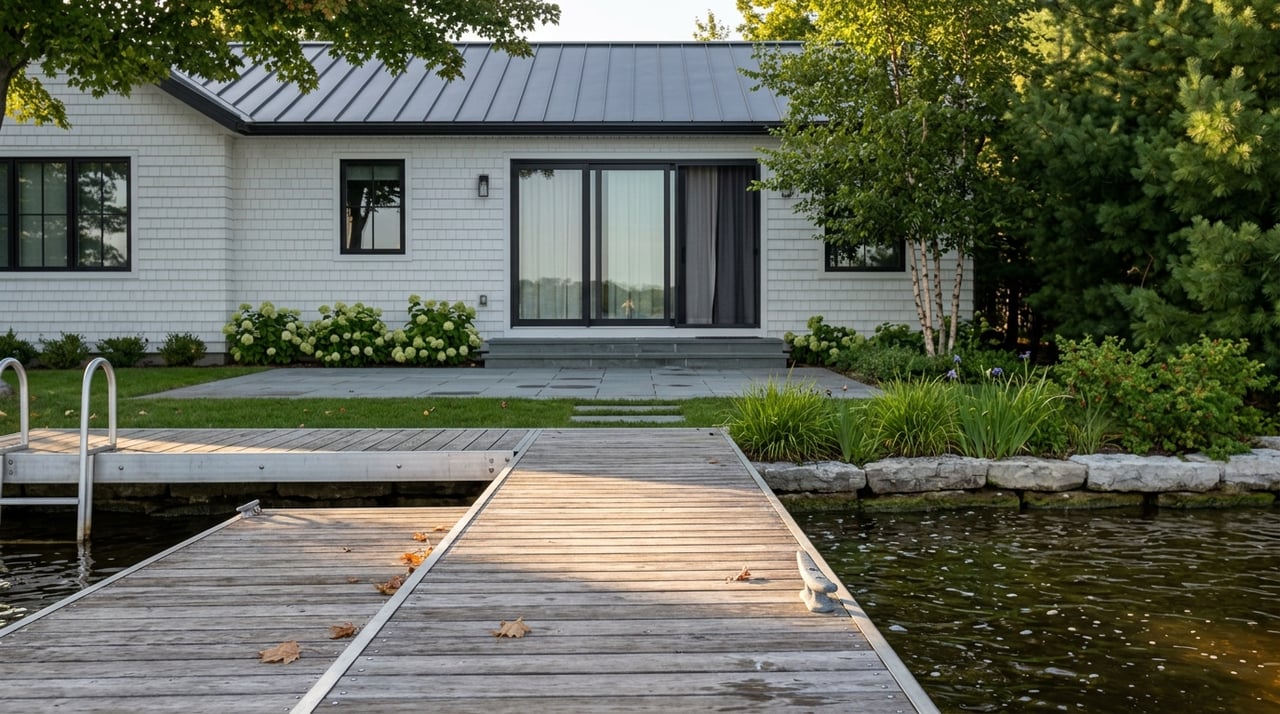
Lakefront Living In Brighton: What Buyers Should Know
May 14, 2026
May 14, 2026
If a lakefront home in Brighton is on your radar, you are probably not just shopping for square footage. You are looking at a lifestyle that blends water access, year-round use, and easy regional convenience. That mix is exactly why Brighton lakefront homes can feel different from other suburban purchases, and why the details matter before you make an offer. Let’s dive in.
Brighton Township says the area has nearly 18,000 residents, 25 named lakes, and a rural feel with convenient access at the crossroads of I-96 and US-23. For many buyers, that creates a rare combination: a home that feels like a getaway without being far from everyday life.
That matters if you want a primary residence with waterfront appeal or a second home that is still practical to use often. In Brighton, lake living is usually a close-in lifestyle purchase, not a remote vacation play. You get the benefit of water-oriented living with strong regional connectivity.
The broader market also adds context. Zillow puts Brighton’s average home value at $432,666, up 3.0% year over year, and homes are going pending in about 14 days. Realtor.com describes Brighton Township as a balanced market in early 2026, which means buyers should stay thoughtful and prepared rather than assume every property will sit.
Not all homes in Brighton are valued the same way, and the township makes that clear. Its assessing guidance specifically lists waterfront, water view, lot size, location, and topography as factors that create land value differences.
In plain terms, a lakefront home is not just a house with a prettier backdrop. The lot, shoreline condition, water access, and view can all affect price, usability, and resale potential.
Water quality is also part of the value conversation. A 2020 study of 113 U.S. lakes found that a 0.1-meter improvement in water clarity was associated with about a 1% change in housing price. EGLE also notes that lower property values can be associated with lower water quality, which is one reason buyers should pay attention to the lake itself, not just the interior finishes.
Brighton lake ownership changes with the seasons, and that is part of the appeal. Summer may bring boating, swimming, and shoreline use, while winter can bring different recreation patterns, including ice fishing, which the Michigan DNR treats as a normal winter activity.
But seasonality also affects what you own and how you maintain it. Michigan State University Extension notes that ice cover on inland lakes varies from year to year and lake to lake, so winter conditions are never one-size-fits-all.
A practical example is your dock. EGLE says seasonal docks, boat hoists, and swim rafts used for private, noncommercial recreation can generally be placed in the water and removed at the end of the boating season without a permit, as long as they do not unreasonably interfere with other users or water flow.
Permanent docks and boat hoists are different. For inland lakes and streams, they generally require permits. If a property includes a dock or hoist, you will want to know exactly what type it is and whether it has been handled correctly.
For lakefront buyers, some of the most important questions are outside the house. EGLE’s Inland Lakes & Streams program covers activities like dredging, filling, placing structures on bottomlands, marina work, and shoreline protection.
That means changes at or below the ordinary high-water mark can trigger state review. Shoreline projects, hardening work, and certain structures may require permits, and buyers should understand what has already been done on the property.
This is especially important if the shoreline has been altered over time. A retaining wall, seawall, regraded bank, or fill near the water may affect future maintenance, environmental impact, and compliance.
EGLE recommends natural shoreline treatments and bioengineering when erosion control is needed. Its guidance also warns that seawalls and steep riprap can increase turbidity, bottomland scouring, adjacent-property damage, lower water quality, and the spread of aquatic invasive species.
State rules are only part of the picture. Brighton Township adds local standards that can shape what you can do with a waterfront lot.
The township zoning ordinance keeps a 25-foot natural feature setback from the ordinary high-water mark. It also allows only docks, mooring apparatus, pools, and decks within the required waterfront yard.
There is also a limit on dock use. Brighton Township restricts waterfront accessory use to one dock per lot or dwelling unit, and multi-access developments can have additional boat and dock limits based on frontage and zoning district.
These rules matter if you are thinking ahead to renovations or outdoor improvements. A property that seems flexible at first glance may have tighter limits once you review setback rules and waterfront yard restrictions.
One of the easiest mistakes in a lakefront search is assuming utilities work the same from one property to the next. In Brighton Township, they do not.
The township says water service is generally provided by individual deep wells regulated by the Livingston County Health Department, while some areas are served by LCWA and township sewer. That makes parcel-level utility verification an important part of due diligence.
For you as a buyer, this affects both cost and planning. If you are comparing two homes on similar lakes, utility differences may influence upkeep, future improvements, and how you evaluate the property overall.
A beautiful view is only part of lakefront ownership. The condition of the shoreline and lake can shape how much you enjoy the property and what it may cost you over time.
EGLE explains that algae blooms can be driven by nutrient inputs such as fertilizer, pet waste, poorly functioning septic systems, grass clippings, leaves, and other yard waste. Its guidance recommends leaving a natural area along the shoreline and keeping septic systems properly maintained where they exist.
Invasive aquatic plants can matter too. Research on Eurasian milfoil and other aquatic invasives has found that infestations reduce lakefront property values, and EGLE connects hard shoreline structures with lower water quality and invasive species proliferation.
When you tour a lakefront home, look beyond the deck and the sunset view. Notice whether the shoreline appears natural or heavily armored, whether erosion is visible, and whether the water edge looks easy to maintain in a sustainable way.
A strong lakefront purchase usually comes down to better questions. Before you move forward, make sure you understand both the house and the water-related details.
Here are some of the most useful questions to ask:
These questions help you evaluate lifestyle fit, risk, and long-term value. They also help you avoid making assumptions based on a property’s staging or summer appearance.
Buying lakefront in Brighton can be a smart move if you understand what makes these properties different. You are not just buying a home. You are buying into a shoreline condition, a set of improvement rules, a utility setup, and a seasonal pattern of use.
That is why data and local guidance matter. A great lakefront purchase balances enjoyment with due diligence, so you can feel confident about both the setting and the asset.
If you are comparing lakefront options in Brighton or want help evaluating a specific property, working with a team that understands both lifestyle value and property-level detail can make the process much clearer. Michael Stroud & Nikki Snyder can help you assess the numbers, the land, and the practical questions that come with waterfront living.
Stay up to date on the latest real estate trends.

We pride ourselves in providing personalized solutions that bring our clients closer to their dream properties and enhance their long-term wealth.